
Mining's AI Adoption Gap: Why the Technology Was Never the Problem
Dymaxim CEO Dominic Stoll on 19 years in mining operations and why almost every failed AI or technology rollout comes down to adoption, not capability.
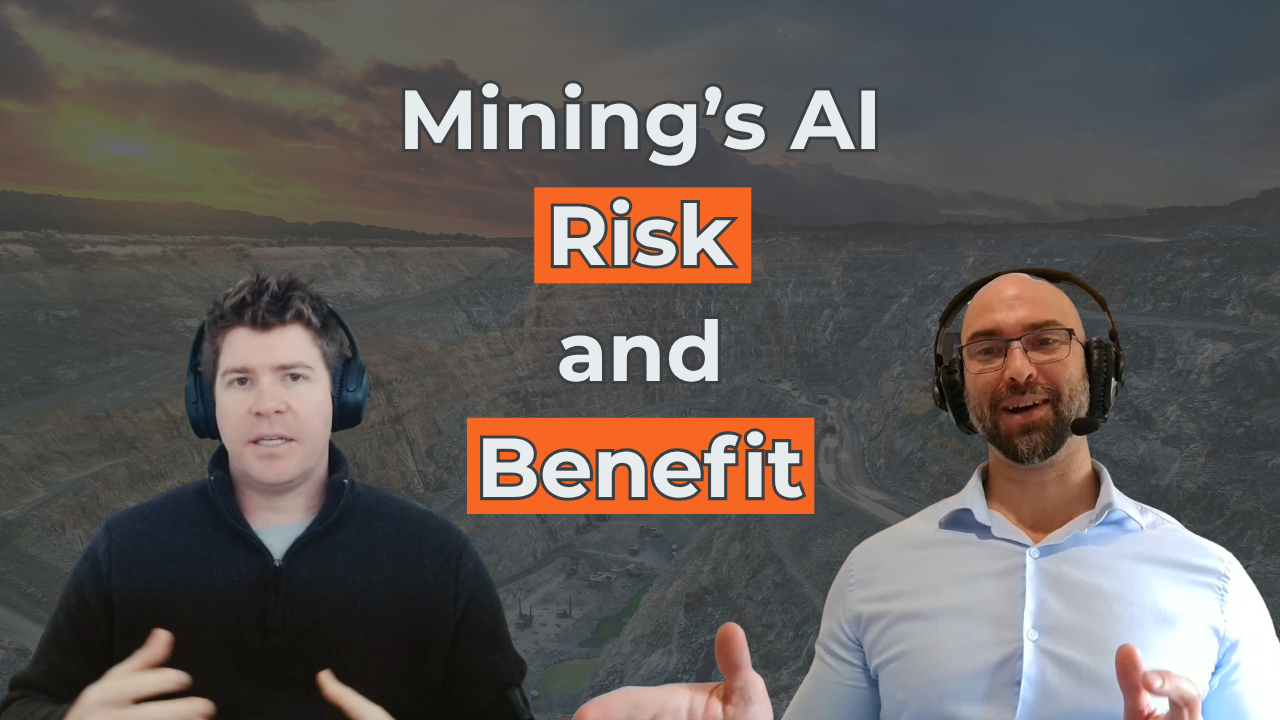
Ask most people what's holding mining back on AI, and you'll get an answer about the technology — it's not accurate enough, the data's not clean enough, the site can't afford it. I sat down with Dominic Stoll, CEO and co-founder of Dymaxim, for FPC's interview series, and his answer wasn't about the technology at all. Nineteen years across Glencore, the University of Queensland, Mipac and now his own company, working plants in Australia, Kazakhstan, Zambia and the Philippines, and the pattern he's seen everywhere is the same: technology initiatives don't fail because the technology can't do the job. They fail on adoption.
Watch the full interview on YouTube →
The adoption gap, not the technology gap
Dom's list of what actually kills a technology initiative has nothing to do with algorithms. It's the problem never being clearly defined in the first place, and nobody checking whether the technology on the table is even the right tool for it, let alone the simplest one. It's the initiative never being tied back to what the business is actually trying to achieve. It's no success metrics set up front, so there's no way to say whether the thing worked. It's under-sponsorship — most of the people pushing a change initiative on site have never championed one before, and the person with the experience to back them isn't in the room. And it's a stakeholder list that's too short: operators, maintenance, managers, all need to be there from day one, not briefed after the decision's made.
As Dom put it: "Very rarely are we linking the technology or the initiative to the organisation's strategic objectives. We're not setting success metrics to define whether that project or that initiative's been successful." Before any of that, he checks the fundamentals — is the instrumentation actually in place and reliable, is there the operational discipline to keep it working, and are frontline teams empowered to act on what they're seeing in the moment, not after the opportunity's gone.
He's watched this play out identically in Kazakhstan, Zambia, the Philippines and Mount Isa. Different backgrounds, different approaches, same failure. "It's incredible the number of similarities that we have in an operation in Kazakhstan, in Zambia, in the Philippines or in Mount Isa in Queensland, Australia," he told me. "It's often the same problem."
Mining's silos make it worse
Part of why the gap is so consistent, in Dom's view, comes down to how mining sets its KPIs. Departments up and down the value chain rarely stop to ask who their KPIs are actually serving downstream. "The dirty C word in mining isn't the four-letter one, it's customer," he said. Get every team asking what the next team in the chain actually needs from them, and the KPIs people are already chasing start pointing the same direction instead of against each other.
Mining's transient workforce compounds it. Projects regularly end up championed by someone relatively new to the industry, without the senior sponsor who understood why the initiative mattered still around to back them — because that person has usually already moved on.
Why simple beats sophisticated
Dymaxim's own approach is deliberately unglamorous, and that's the point. Rather than building a predictive model and asking operators to trust an output they can't see inside, it looks backwards at what a site has already achieved. "Your best proven performance is actually sitting in your historian right now," Dom said. "Let's just surface that to the operator." An operator isn't being asked to trust a black box — they're being shown a set of plant conditions they, or someone on their crew, has actually run before.
The approach works in two phases. First, raise the floor to the ceiling — bring every operator up to the level of the site's most experienced person, which does most of the work given how much day-to-day variability comes from inconsistent performance rather than the plant itself. Once that's standardised, statistically controlled steps push the ceiling higher again. It's a different model to most AI approaches, too: because it's built on proven operating history rather than a trained prediction, it doesn't quietly degrade as conditions drift the way a static model does.
Dom named where performance most visibly breaks down: shift change, and more sharply again on FIFO operations at block change, when an incoming crew has to absorb a week or more of context in a single handover. It's the same moment his two-element read on why change initiatives succeed or fail comes into play — will and skill. You can have all the skill in the world and still fail without the will, which for Dom comes down to a clear business mandate connecting the initiative to what the business is actually trying to achieve.
No silver bullet
Dom was equally direct about where AI goes wrong in the other direction — treated as a silver bullet on its own, without operational context behind it. A data-science-only lens on mining data, he said, tends to produce "horrible recommendations" that are really just spurious correlations restating physics everyone on site already knows. Dymaxim's answer is combining process and metallurgy expertise with applied AI from the start, so the model is built with domain context in it, not layered on after the fact.
It's a big part of why we've been talking to more technology partners like Dymaxim: the ones getting real traction are building the change-management and capability work into the deployment from day one, not treating it as an afterthought once the tool's already live.
The technology isn't the barrier anymore — AI capable of doing genuinely useful work in minerals processing already exists. The real question, for every site weighing up its next AI investment, is whether the unglamorous work has been done: the sponsorship, the stakeholder buy-in, the instrumentation, the clear line back to why it matters. Skip that, and the smartest model in the world sits unused.